🌍 Terracotta Pottery of Pokaran, Rajasthan
The Living Legacy of Earth, Fire, and Human Soul
Introduction – Where Clay Becomes Culture
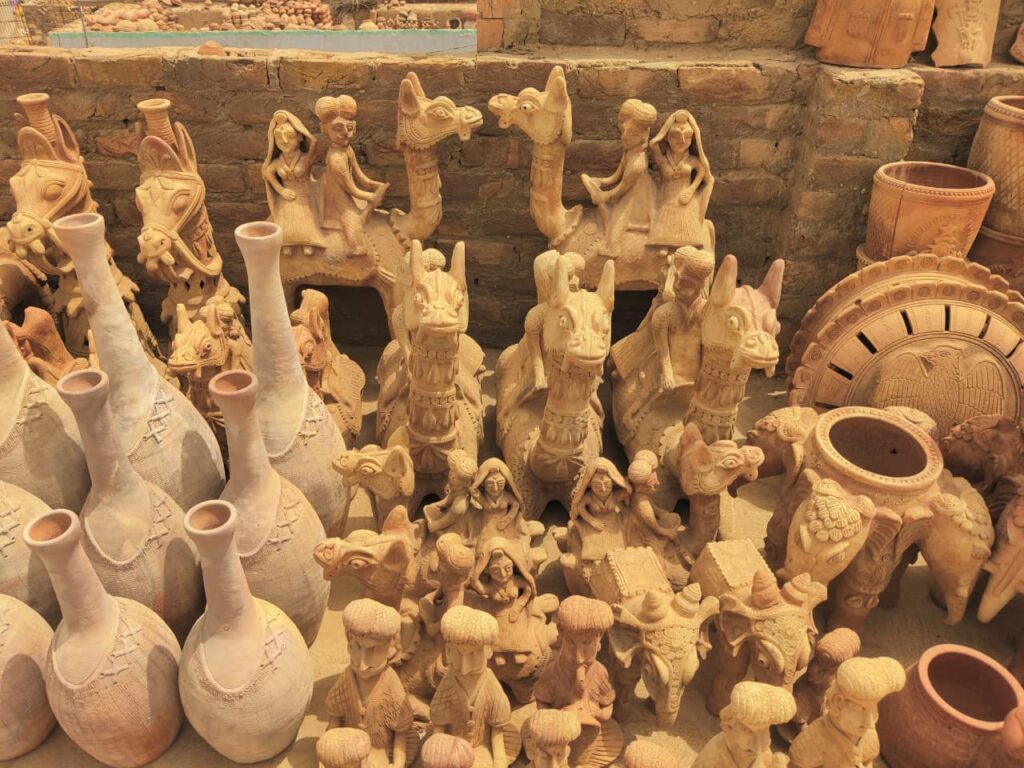
In the golden sands of Rajasthan’s Thar Desert lies Pokaran, a land where history whispers through dunes and tradition breathes through handcrafted clay. Here, terracotta pottery is not merely a craft—it is identity, livelihood, heritage, and spiritual connection. For centuries, Pokaran’s potters have shaped earth into vessels of life, art, and memory, preserving a tradition older than written history.
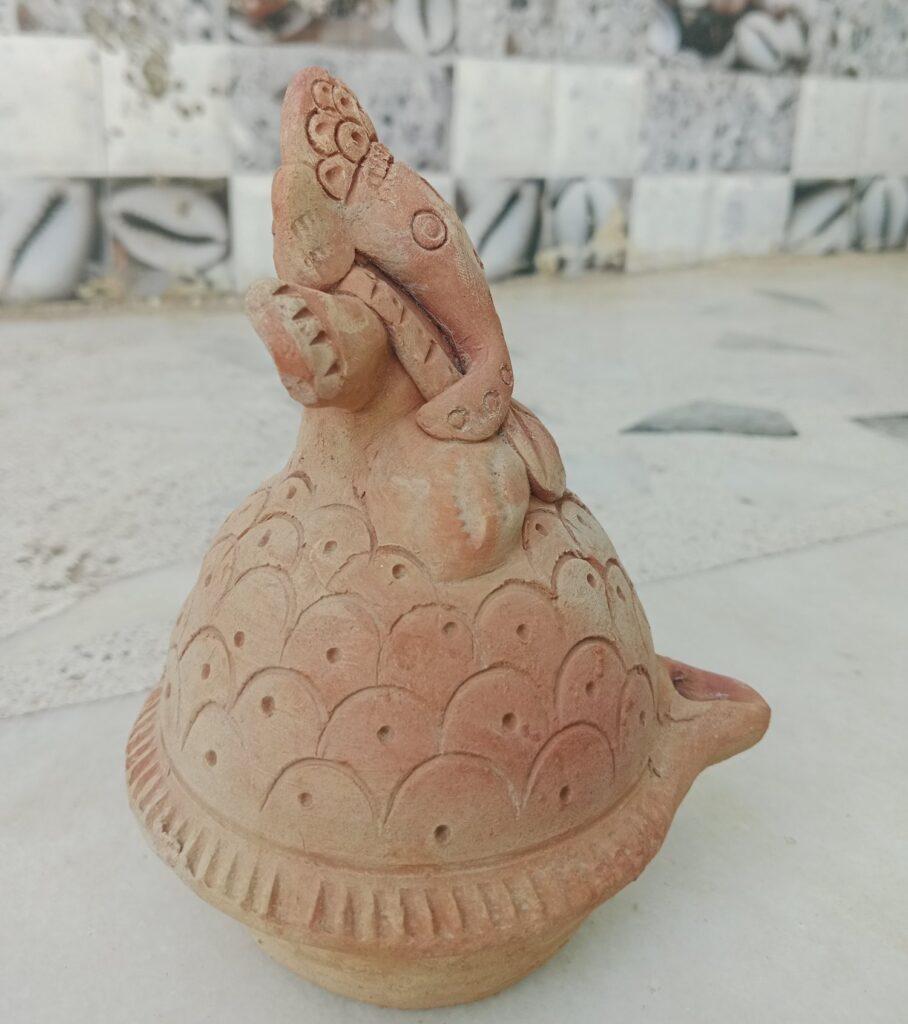
Pokaran pottery is famous for its distinctive light-pink clay, fine texture, rustic beauty, and exceptional durability, which set it apart from terracotta traditions elsewhere in India.
Introduction – Where Clay Becomes Culture
In the golden sands of Rajasthan’s Thar Desert lies Pokaran, a land where history whispers through dunes and tradition breathes through handcrafted clay. Here, terracotta pottery is not merely a craft—it is identity, livelihood, heritage, and spiritual connection. For centuries, Pokaran’s potters have shaped earth into vessels of life, art, and memory, preserving a tradition older than written history.
Pokaran pottery is famous for its distinctive light-pink clay, fine texture, rustic beauty, and exceptional durability, which set it apart from terracotta traditions elsewhere in India.
🌱 Birth and Origin of Pokaran Terracotta Pottery
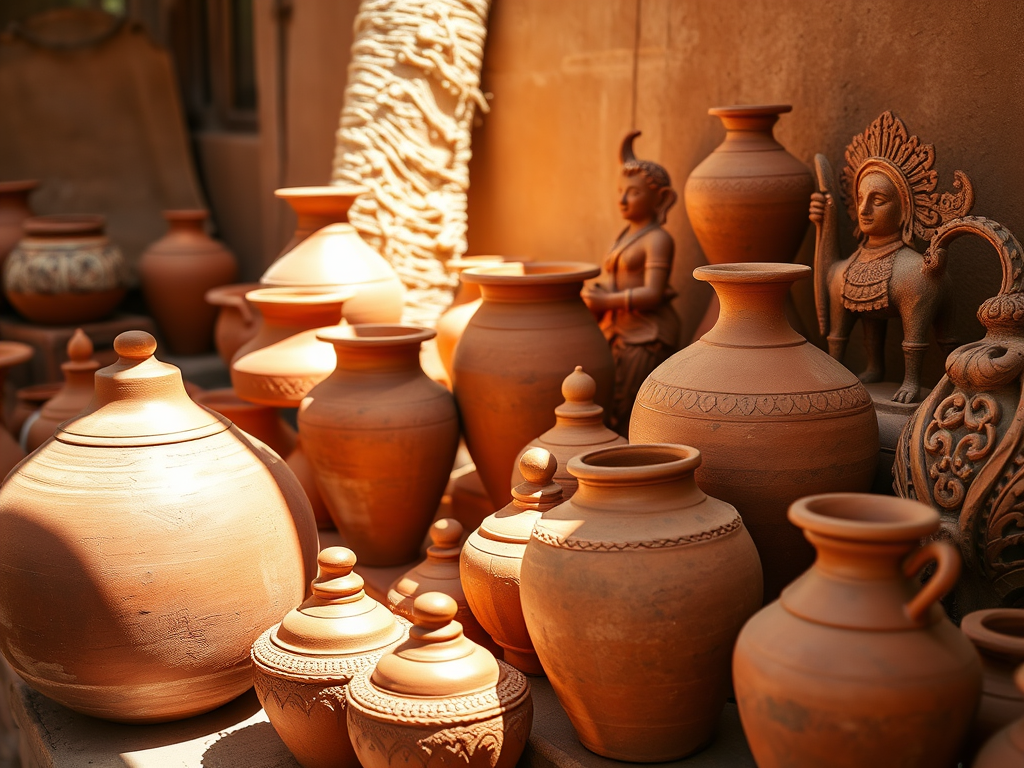
Terracotta, meaning “baked earth,” is among humanity’s earliest artistic expressions, historically used for sculptures, vessels, bricks, and roofing materials.
The roots of Pokaran pottery stretch back centuries, sustained by the region’s abundant clay deposits and the craftsmanship passed down through generations.
Ancient texts and archaeological references indicate that pottery traditions in Pokaran existed long before modern civilization, with grain storage silos made of clay surviving for more than three generations—testimony to their durability and engineering wisdom.
The roots of Pokaran pottery stretch back centuries, sustained by the region’s abundant clay deposits and the craftsmanship passed down through generations.
Ancient texts and archaeological references indicate that pottery traditions in Pokaran existed long before modern civilization, with grain storage silos made of clay surviving for more than three generations—testimony to their durability and engineering wisdom.
🌾 The Unique Soil That Defines Pokaran Pottery
The identity of Pokaran pottery begins with its soil. Unlike typical red terracotta found elsewhere, Pokaran clay is light pink and exceptionally fine due to unique environmental conditions and mineral composition.
This clay is sourced from a nearby region where rainwater collects, giving it the perfect viscosity and plasticity for shaping pottery.
The harsh desert climate further strengthens the clay’s properties, making Pokaran pottery resistant to extreme heat and cold.
This clay is sourced from a nearby region where rainwater collects, giving it the perfect viscosity and plasticity for shaping pottery.
The harsh desert climate further strengthens the clay’s properties, making Pokaran pottery resistant to extreme heat and cold.
🏺 Why Terracotta Pottery Is Needed Today
Terracotta pottery fulfills essential human needs—practical, cultural, and ecological.
Functional Importance
Historically, Pokaran potters created everyday essentials such as water pots, cups, cooking vessels, and storage containers.
Cultural Importance
Pottery plays a sacred role in rituals, weddings, festivals, and religious ceremonies across Rajasthan, symbolizing prosperity and purity.
Environmental Importance
Terracotta is eco-friendly, biodegradable, chemical-free, and sustainable—perfect for modern sustainable living trends.
Functional Importance
Historically, Pokaran potters created everyday essentials such as water pots, cups, cooking vessels, and storage containers.
Cultural Importance
Pottery plays a sacred role in rituals, weddings, festivals, and religious ceremonies across Rajasthan, symbolizing prosperity and purity.
Environmental Importance
Terracotta is eco-friendly, biodegradable, chemical-free, and sustainable—perfect for modern sustainable living trends.
🧱 Materials Used in Pokaran Terracotta Pottery
The craft relies on natural resources sourced locally:
1. Light-pink clay
2. Water
3. Cow dung cakes and firewood for firing
4. Ash and broken pottery for kiln insulation
5. Natural mineral pigments for decoration
6. Traditional tools include the potter’s wheel.
7. engraving tools, pug mill, and kiln for firing.
1. Light-pink clay
2. Water
3. Cow dung cakes and firewood for firing
4. Ash and broken pottery for kiln insulation
5. Natural mineral pigments for decoration
6. Traditional tools include the potter’s wheel.
7. engraving tools, pug mill, and kiln for firing.
🔥 Step-by-Step Process of Creating Pokaran Terracotta Pottery
🔥 Step-by-Step Process of Creating Pokaran Terracotta Pottery
1. Clay Collection and Preparation
Raw clay is beaten, ground, filtered, and mixed with water to achieve a smooth workable consistency.
2. Kneading and Refining
The clay is kneaded thoroughly to remove air bubbles and improve elasticity.
3. Shaping on the Potter’s Wheel
The clay is placed on a spinning wheel where artisans shape pots, vases, lamps, toys, and sculptures using hands and tools.
4. Sun Drying
The shaped pieces are dried under sunlight for several days to strengthen them naturally.
5. Decoration and Painting
Intricate floral and geometric patterns are hand-painted, reflecting Rajasthan’s artistic heritage.
6. Firing in Kilns
The dried pottery is fired at high temperatures in traditional or modern kilns to harden and finalize the product.
1. Clay Collection and Preparation
Raw clay is beaten, ground, filtered, and mixed with water to achieve a smooth workable consistency.
2. Kneading and Refining
The clay is kneaded thoroughly to remove air bubbles and improve elasticity.
3. Shaping on the Potter’s Wheel
The clay is placed on a spinning wheel where artisans shape pots, vases, lamps, toys, and sculptures using hands and tools.
4. Sun Drying
The shaped pieces are dried under sunlight for several days to strengthen them naturally.
5. Decoration and Painting
Intricate floral and geometric patterns are hand-painted, reflecting Rajasthan’s artistic heritage.
6. Firing in Kilns
The dried pottery is fired at high temperatures in traditional or modern kilns to harden and finalize the product.
📜 Historical Journey – Past, Present, and Evolution
🏛 Past – The Age of Utility
In earlier times, Pokaran potters produced purely functional items such as water pots, cooking vessels, and storage containers for village life.
The craft was practiced primarily by the Kumbhar community, traditionally landless artisans who relied entirely on pottery for survival.
🌍 Present – The Age of Art and Market
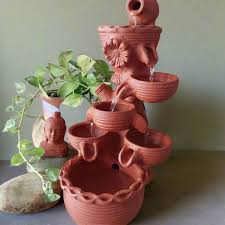
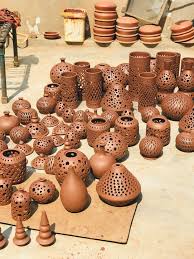
With changing demand, Pokaran pottery expanded into decorative products like vases, planters, toys, and artistic sculptures.
Today, Pokaran pottery is recognized as a Geographical Indication (GI) craft, proving its authenticity and regional uniqueness.
🚀 Future – The Age of Global Recognition
Modern designers, eco-friendly consumers, and global markets are embracing terracotta for sustainable living. Pokaran pottery is evolving into premium décor and lifestyle products while preserving its traditional soul.
In earlier times, Pokaran potters produced purely functional items such as water pots, cooking vessels, and storage containers for village life.
The craft was practiced primarily by the Kumbhar community, traditionally landless artisans who relied entirely on pottery for survival.
🌍 Present – The Age of Art and Market
With changing demand, Pokaran pottery expanded into decorative products like vases, planters, toys, and artistic sculptures.
Today, Pokaran pottery is recognized as a Geographical Indication (GI) craft, proving its authenticity and regional uniqueness.
🚀 Future – The Age of Global Recognition
Modern designers, eco-friendly consumers, and global markets are embracing terracotta for sustainable living. Pokaran pottery is evolving into premium décor and lifestyle products while preserving its traditional soul.
👨👩👧 Community and Social Impact
Terracotta pottery is more than craftsmanship—it is community development.
Economic Growth
The craft provides livelihood for hundreds of artisan families who depend on pottery as their primary income source.
Cultural Preservation
Each pot tells a story of heritage, spirituality, and identity passed across generations.
Skill Transmission
Knowledge is transferred orally from elders to youth, ensuring continuity of tradition.
Women’s Empowerment
Women participate in clay preparation, decoration, and marketing, strengthening household economies.
Economic Growth
The craft provides livelihood for hundreds of artisan families who depend on pottery as their primary income source.
Cultural Preservation
Each pot tells a story of heritage, spirituality, and identity passed across generations.
Skill Transmission
Knowledge is transferred orally from elders to youth, ensuring continuity of tradition.
Women’s Empowerment
Women participate in clay preparation, decoration, and marketing, strengthening household economies.
🌍 Role of Pokaran Pottery in Global Cultural Exchange
Pokaran pottery today is showcased in:
- Craft fairs
- Tourism markets
- Architecture and interior design
- Eco-friendly lifestyle brands
Tourists visiting Rajasthan purchase these products as cultural souvenirs that reflect authentic heritage.
🌿 Sustainability – A Green Craft for a Greener World
Pokaran terracotta pottery represents circular economy principles:
1. Recyclable clay
2. Zero chemical waste
3. Renewable firing materials
4. Long-lasting durable products
This makes it a perfect answer to global environmental challenges.
1. Recyclable clay
2. Zero chemical waste
3. Renewable firing materials
4. Long-lasting durable products
This makes it a perfect answer to global environmental challenges.
🌟 Vision of Pokaran Pottery – Taking Heritage to the World
Pokaran pottery artisans are not just preserving tradition—
The artisans at The Pokaran Pottery are building a global identity for Indian handcrafted heritage. Through innovation, digital platforms, storytelling, and modern design, they aim to connect ancient craftsmanship with modern lifestyles.
Their mission is clear:
👉 Transform clay into culture
👉 Transform heritage into livelihood
👉 Transform tradition into global pride
The artisans at The Pokaran Pottery are building a global identity for Indian handcrafted heritage. Through innovation, digital platforms, storytelling, and modern design, they aim to connect ancient craftsmanship with modern lifestyles.
Their mission is clear:
👉 Transform clay into culture
👉 Transform heritage into livelihood
👉 Transform tradition into global pride
🌺 Conclusion – The Eternal Spirit of Earth
The terracotta pottery of Pokaran is a living heritage shaped by centuries of human effort, desert soil, blazing fire, and artistic imagination. It represents resilience, creativity, sustainability, and cultural pride.
Every Pokaran pot carries the heartbeat of Rajasthan—
The memory of ancestors, the hands of artisans, and the dreams of future generations.
Every Pokaran pot carries the heartbeat of Rajasthan—
The memory of ancestors, the hands of artisans, and the dreams of future generations.